Disease
Vesicoureteral Reflux
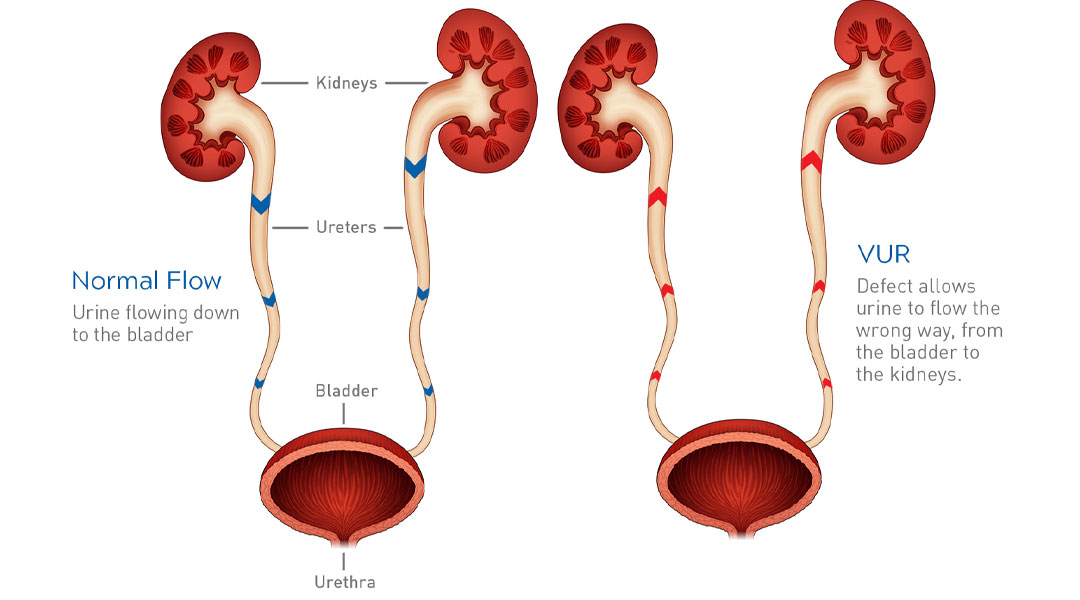
What is Vesicoureteral Reflux (VUR)?
Vesicoureteral Reflux (VUR) is a condition in which urine flows backward from the bladder into one or both ureters and sometimes up to the kidneys. Normally, urine flows in one direction—from the kidneys to the bladder—but in VUR, a faulty valve mechanism at the junction where the ureter enters the bladder allows urine to reverse direction.
Causes of VUR
- Congenital abnormality (present at birth)
- Weakness or improper formation of the valve between the bladder and ureter
- Recurrent urinary tract infections (UTIs)
- Bladder dysfunction
Who is affected?
VUR is most commonly diagnosed in infants and young children, especially during evaluation for UTIs. It can also be detected during prenatal ultrasounds if kidney swelling (hydronephrosis) is seen.
Symptoms of VUR
- Repeated urinary tract infections
- Pain or burning during urination
- Bedwetting (in older children)
- Abdominal or flank pain
- Fever without obvious cause
- Poor weight gain (in chronic cases)
Diagnosis
- Urinalysis and urine culture
- Ultrasound of the kidneys and bladder
- Voiding cystourethrogram (VCUG) – a specialized X-ray to detect reflux
- Nuclear scan (DMSA) to assess kidney scarring
Treatment Options
- Mild cases may resolve with time and careful monitoring
- Daily low-dose antibiotics to prevent infections
- Surgical correction (ureteral reimplantation or endoscopic injection) for severe or persistent cases
- Managing bladder function to reduce pressure on the urinary system
