Disease
Choledochal Cyst
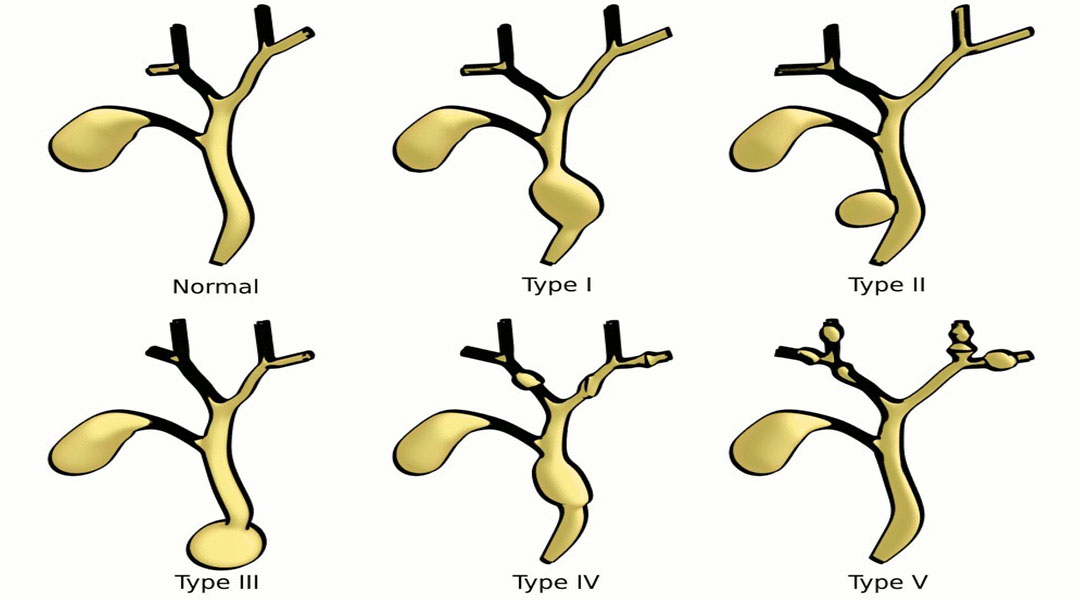
What is a Choledochal Cyst?
A choledochal cyst is a rare congenital condition in which parts of the bile ducts become abnormally dilated (widened). These bile ducts are responsible for carrying bile—a fluid produced by the liver that aids in digestion—from the liver and gallbladder to the small intestine. This abnormal dilation can lead to serious health issues if left untreated.
Causes
While the exact cause is not fully understood, choledochal cysts are believed to result from abnormal development of the bile ducts during fetal growth. It may also be associated with an abnormal junction of the pancreatic and bile ducts, which allows pancreatic enzymes to flow backward into the bile duct, causing inflammation and dilation.
Symptoms
Symptoms may vary depending on the type and size of the cyst, but commonly include
- Abdominal pain (especially in the right upper quadrant)
- Jaundice (yellowing of the skin and eyes)
- Nausea and vomiting
- Fever (in cases of infection)
- A palpable mass in the abdomen
- Dark urine and pale stools
Complications
If untreated, choledochal cysts can lead to several complications, such as:
- Recurrent cholangitis (bile duct infection)
- Pancreatitis
- Bile duct stones
- Liver cirrhosis
- Bile duct cancer (cholangiocarcinoma)
Diagnosis
Diagnosis typically involves imaging tests such as:
- Ultrasound of the abdomen
- Magnetic Resonance Cholangiopancreatography (MRCP)
- CT scan
- Endoscopic Retrograde Cholangiopancreatography (ERCP)
Treatment
Surgical removal of the cyst is the standard treatment. The procedure involves:
- Complete excision (removal) of the cyst
- Reconstruction of the bile duct, usually using a part of the intestine (Roux-en-Y hepaticojejunostomy)
