Disease
Hirschsprung Disease
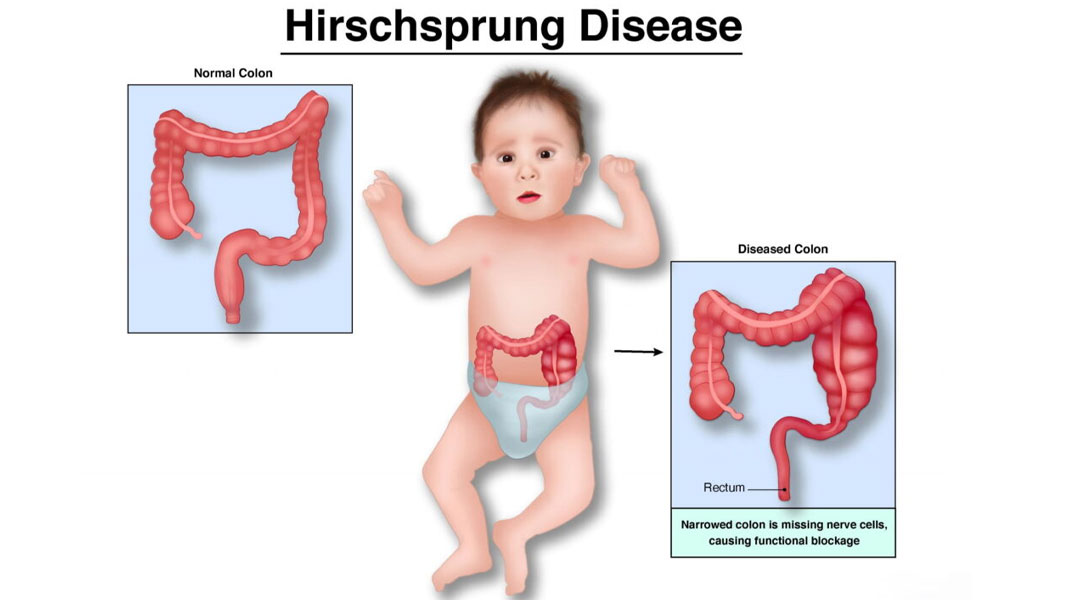
Hirschsprung Disease – What Parents Need to Know
What is Hirschsprung Disease?
Hirschsprung disease is a congenital condition (present at birth) in which nerve cells (ganglion cells) are missing from a part of the baby’s intestine. These nerve cells are essential for bowel movements. Without them, the affected portion of the intestine cannot push stool through, causing a blockage and severe constipation.
How Does It Present in Newborns?
Most babies with Hirschsprung disease show symptoms within the first few days after birth. Common signs include:
- Failure to pass meconium (baby’s first stool) within 48 hours
- Swollen belly (abdominal distension)
- Vomiting (sometimes green or yellow in color)
- Constipation or difficulty passing stool
- Poor feeding and failure to thrive
Why Does Hirschsprung Disease Occur?
During fetal development, nerve cells usually spread throughout the intestines. In Hirschsprung disease, this migration process is incomplete, leaving a section of the bowel without the necessary nerve cells to function properly. The exact cause is not always known, but sometimes it runs in families or is associated with genetic conditions like Down syndrome.
Diagnosis
The diagnosis is typically made through a combination of:
- Abdominal X-rays or contrast enema to detect bowel obstruction
- Rectal biopsy, which confirms the absence of ganglion cells
Treatment
Surgery is the only effective treatment for Hirschsprung disease. The goal is to remove the portion of the intestine that lacks nerve cells and connect the healthy part to the anus. This is usually done in one or two stages depending on the baby's condition.
Post-Surgery Outcome
With timely surgery, most children recover well and are able to lead healthy lives. However, some may experience long-term issues like constipation or enterocolitis (inflammation of the intestine), which require ongoing care and follow-up.
Why Choose a Pediatric Surgeon for Hirschsprung Disease?
Newborn surgery demands utmost precision, expertise, and compassion. A qualified pediatric surgeon like Dr. Pramila Sharma ensures the safest and most effective surgical care for conditions like Hirschsprung disease—giving your child the best start in life.
