Disease
Congenital Pulmonary Airway Malformation Disease
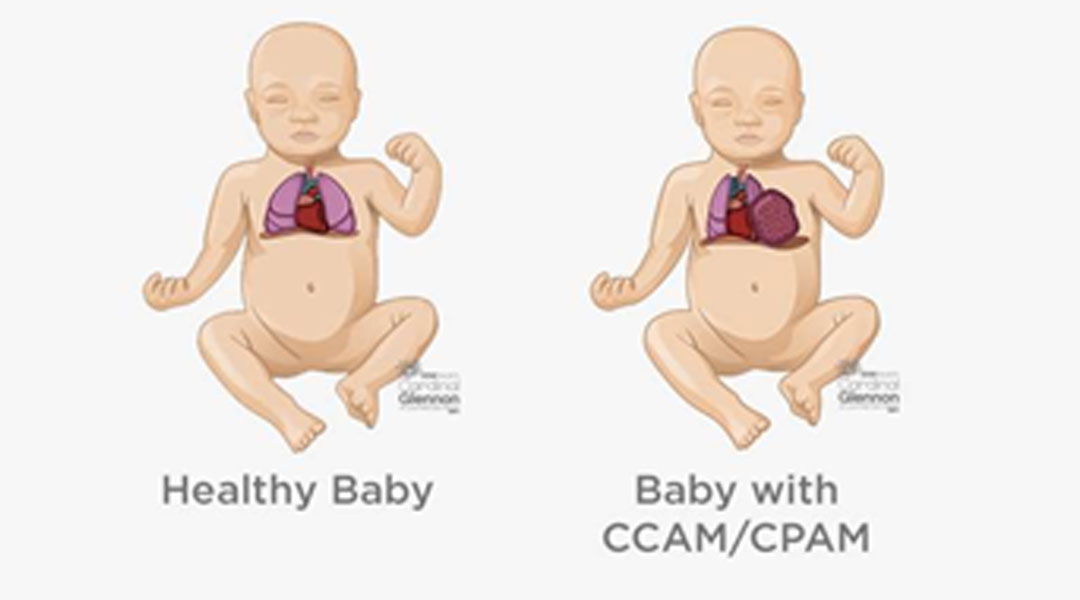
Congenital Pulmonary Airway Malformation (CPAM)
Congenital Pulmonary Airway Malformation (CPAM), formerly known as Congenital Cystic Adenomatoid Malformation (CCAM), is a rare developmental disorder of the lungs that occurs in newborns. It is characterized by the abnormal formation of lung tissue, resulting in cysts or solid masses within the lungs.
Causes
CPAM develops during fetal growth due to a disruption in the normal development of the lung airways. The exact cause is unknown, but it is believed to be due to abnormal branching of the airways in early pregnancy.
Types of CPAM
CPAM is classified into five types (0 to IV), based on the size and structure of the cysts:
- Type I: Large cysts (2–10 cm), most common and usually benign.
- Type II: Smaller cysts (2 cm), often associated with other congenital anomalies
- Type III: Solid, bulky masses made of tiny cysts.
- Type IV: Large peripheral cysts, can resemble pleuropulmonary blastoma
- Type 0: Rare, involves the tracheobronchial tree, typically incompatible with life
Symptoms
Symptoms can vary based on the size and location of the lesion
- Breathing difficulties after birth
- Rapid breathing or cyanosis (bluish skin)
- Recurrent respiratory infections
- Some cases are asymptomatic and discovered later in life
Diagnosis
- Prenatal ultrasound (can detect CPAM before birth)
- Fetal MRI for detailed imaging
- Postnatal chest X-ray or CT scan
Treatment
- In symptomatic newborns, surgical removal of the affected lung portion (lobectomy) is often required.
- In asymptomatic cases, surgery may still be recommended to prevent infection or malignancy
- Close monitoring may be advised if the lesion is small and stable
