Disease
Duodenal Atresia Disease
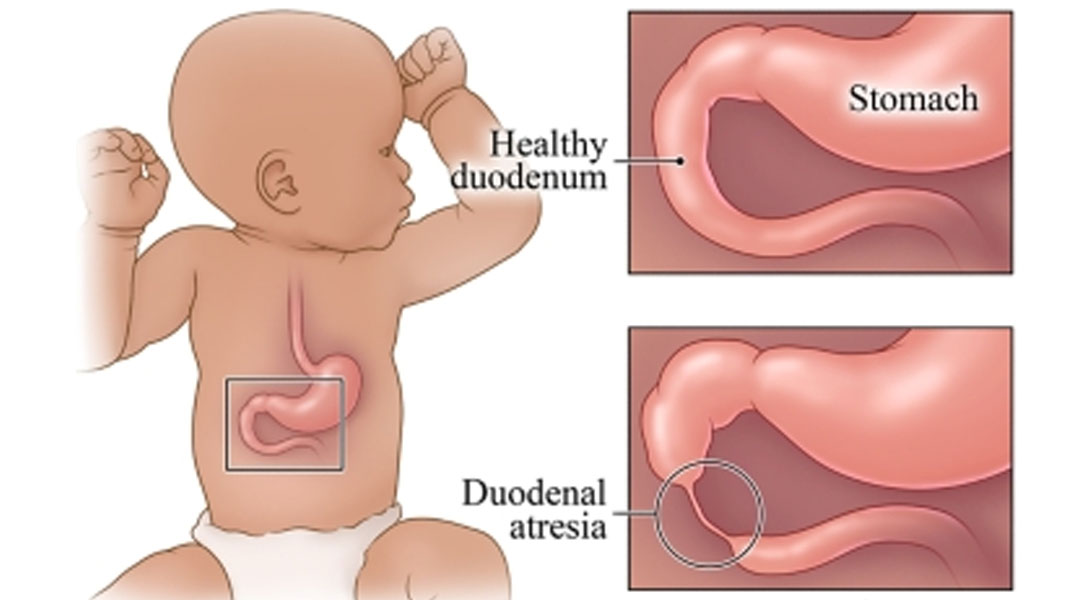
What is Duodenal Atresia?
Duodenal Atresia is a congenital (present at birth) condition in which the first part of the small intestine, called the duodenum, is closed or blocked. This prevents the normal passage of stomach contents into the rest of the intestines, leading to serious digestive issues shortly after birth.
Causes
Duodenal Atresia typically develops during early fetal development. It is often associated with other congenital conditions, particularly:
- Down Syndrome (Trisomy 21)
- Congenital heart defects
- IMalrotation of the intestine
Symptoms
Babies born with duodenal atresia usually show symptoms within the first 24–48 hours of life, including:
- Persistent vomiting (which may be green or yellow due to bile)
- Swollen or bloated abdomen
- Failure to pass meconium (the first stool)
- Dehydration and weight loss
Diagnosis
Duodenal Atresia is often diagnosed shortly after birth, but it can also be detected during pregnancy through:
- Prenatal ultrasound showing a "double bubble" sign (a characteristic appearance of the stomach and duodenum)
- Postnatal X-ray or abdominal imaging
Treatment
The primary treatment for duodenal atresia is surgery. The surgical procedure involves removing the blocked section of the duodenum or creating a bypass, allowing food to pass normally. After surgery, most infants recover well with proper post-operative care and feeding support.
