Disease
Epigastric Hernia
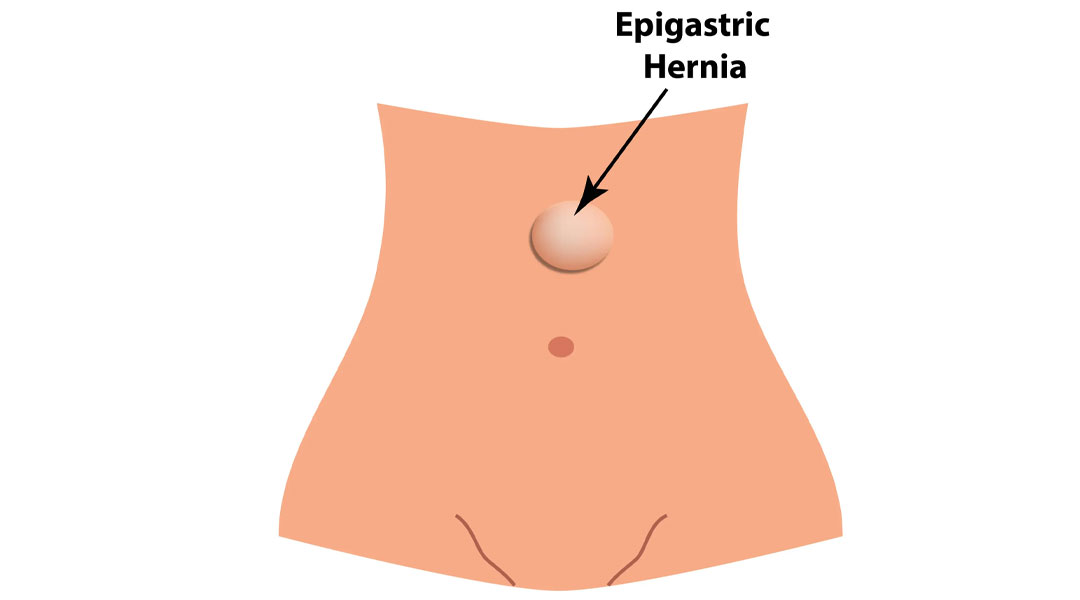
What is an Epigastric Hernia?
An epigastric hernia is a type of abdominal hernia that occurs when fat or tissue pushes through a weak spot in the abdominal wall between the breastbone and the belly button (navel). This area is known as the epigastric region.
Causes
Epigastric hernias typically develop due to:
- Congenital weakness in the abdominal muscles
- Heavy lifting or straining
- Chronic coughing
- Obesity or rapid weight changes
Symptoms
- A small lump or bulge in the upper abdomen
- Pain or discomfort, especially when coughing, bending, or lifting
- Nausea or digestive discomfort (in rare cases)
- Some patients may be asymptomatic
Diagnosis
A physical examination by a healthcare professional is usually sufficient to diagnose an epigastric hernia. In some cases, imaging tests like ultrasound or CT scan may be recommended for a clearer view.
Treatment
- Small and asymptomatic hernias may not require immediate treatment but should be monitored.
- Surgery is the most effective treatment and is typically recommended to prevent
complications such as incarceration or strangulation of the hernia
- Open or laparoscopic hernia repair is done to reinforce the abdominal wall and close the defect.
Why Choose Us for Epigastric Hernia Treatment?
- Experienced surgeons specialized in abdominal wall hernias
- Advanced laparoscopic and minimally invasive techniques
- Personalized care and quick recovery protocols
Treatment Options
Treatment depends on the type and cause of torticollis
- Physical therapy and stretching exercises (especially for congenital cases)
- Heat therapy and muscle relaxants
- Pain relievers and anti-inflammatory medications
- Botox injections (for spasmodic torticollis)
- Surgical correction (in severe or unresponsive cases)
- Use of orthopedic devices like cervical collars or braces
