Disease
Vesicoureteral Reflux Disease
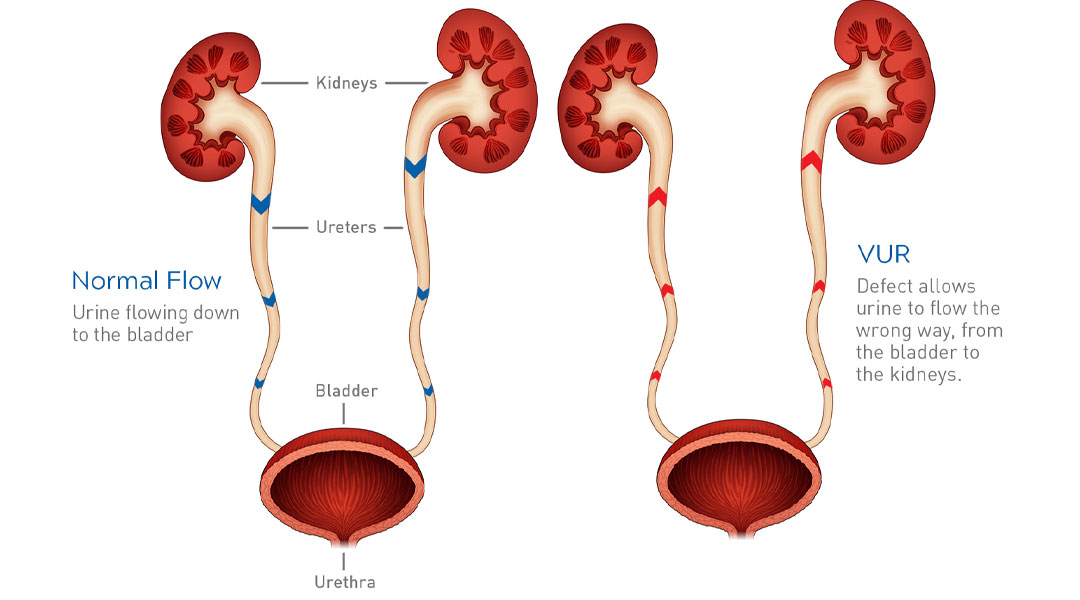
What is Vesicoureteral Reflux (VUR)?
Vesicoureteral Reflux (VUR) is a condition in which urine flows backward from the bladder into one or both ureters and sometimes into the kidneys. Normally, urine should flow in one direction—from the kidneys to the bladder—but VUR disrupts this flow and can increase the risk of urinary tract infections (UTIs) and kidney damage.
Who is Affected?
VUR is most commonly diagnosed in infants and young children, but it can occur at any age. It may be detected after a child experiences a urinary tract infection or during prenatal ultrasounds.
Types of VUR
- Primary VUR: Caused by a congenital defect in the valve between the ureter and bladder.
- Secondary VUR: Occurs due to bladder dysfunction or blockage, often as a result of infection or neurological issues.
Symptoms of VUR
- Recurring urinary tract infections (UTIs)
- Fever without other symptoms (especially in infants)
- Bedwetting or daytime wetting
- Abdominal or flank pain
- Blood in the urine (hematuria)
Diagnosis
Diagnosis may involve:
- Urinalysis and urine culture
- Renal ultrasound
- Voiding cystourethrogram (VCUG)
- Nuclear scan of the kidneys
Treatment Options
Treatment depends on the severity of the reflux:
- Mild cases: May resolve on their own as the child grows. Preventive antibiotics may be prescribed.
- Moderate to severe cases: May require surgical intervention (e.g., ureteral reimplantation or endoscopic injection).
Why Early Detection is Important
Untreated VUR can lead to:
- Kidney scarring
- High blood pressure
- Long-term kidney damage or failure
