Disease
Esophageal Atresia with Tracheoesophageal Fistula Disease
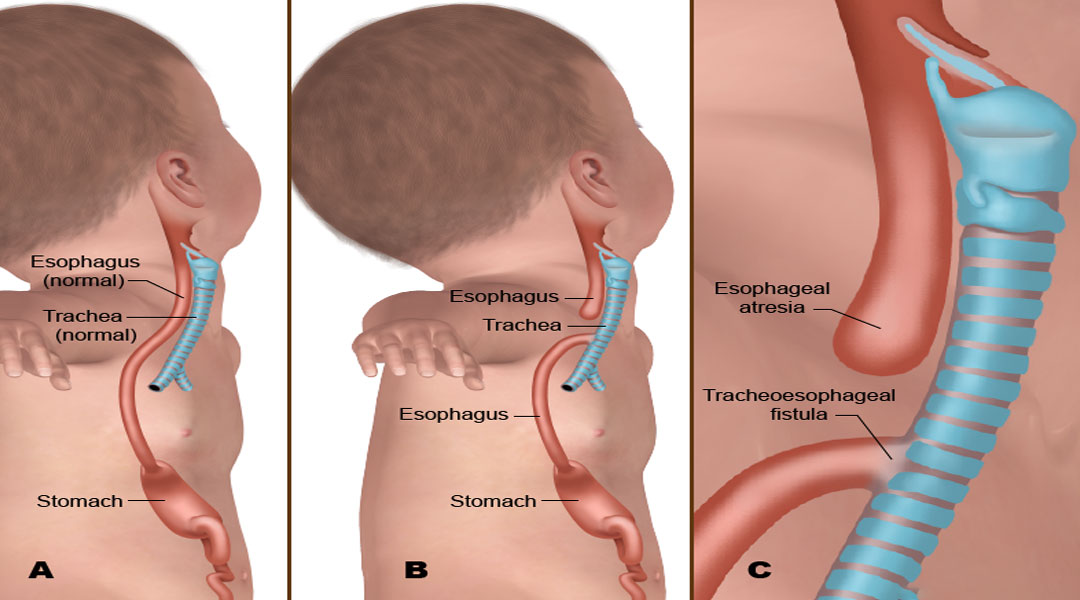
Esophageal Atresia with Tracheoesophageal Fistula (EA/TEF)
Esophageal Atresia with Tracheoesophageal Fistula (EA/TEF) is a rare congenital condition that affects the esophagus and trachea (windpipe) in newborns. This condition occurs when the esophagus—the tube that carries food from the mouth to the stomach—is not properly connected, and an abnormal connection (fistula) forms between the esophagus and the trachea.
Types of EA/TEF
There are several types of EA/TEF, depending on how the esophagus and trachea are connected:
- Type C (most common): The upper esophagus ends in a blind pouch, and the lower segment is connected to the trachea
- Type A: Both ends of the esophagus are disconnected and do not attach to the trachea.
- Other types involve different combinations of atresia and fistulas.
Causes and Risk Factors
The exact cause of EA/TEF is not fully known, but it is believed to result from abnormal development during early fetal growth. It may occur as an isolated condition or be associated with other birth defects such as:
- Heart anomalies
- Kidney malformations
- Limb abnormalities
- VACTERL association (Vertebral, Anorectal, Cardiac, Tracheoesophageal, Renal, and Limb defects)
Symptoms
Newborns with EA/TEF typically show signs within the first few hours of life:
- Excessive drooling or frothy saliva
- Coughing or choking when feeding
- Cyanosis (bluish skin color) due to breathing difficulties
- Distended abdomen
- Inability to swallow
Diagnosis
EA/TEF is usually diagnosed shortly after birth based on symptoms and confirmed with diagnostic tools such as:
- Chest and abdominal X-rays
- Inability to pass a nasogastric tube into the stomach
Treatment
The standard treatment for EA/TEF is surgical repair, which is usually performed within the first few days of life. The surgery involves:
- Closing the fistula between the trachea and esophagus
- Connecting the two ends of the esophagus
In some complex cases, a staged surgical approach or esophageal replacement may be needed.
Prognosis
With early diagnosis and proper surgical treatment, most infants recover well from EA/TEF. Long-term follow-up may be necessary to monitor for complications such as:
- Gastroesophageal reflux (GERD)
- Swallowing difficulties
- Respiratory infections
