Disease
Hemangioma Disease
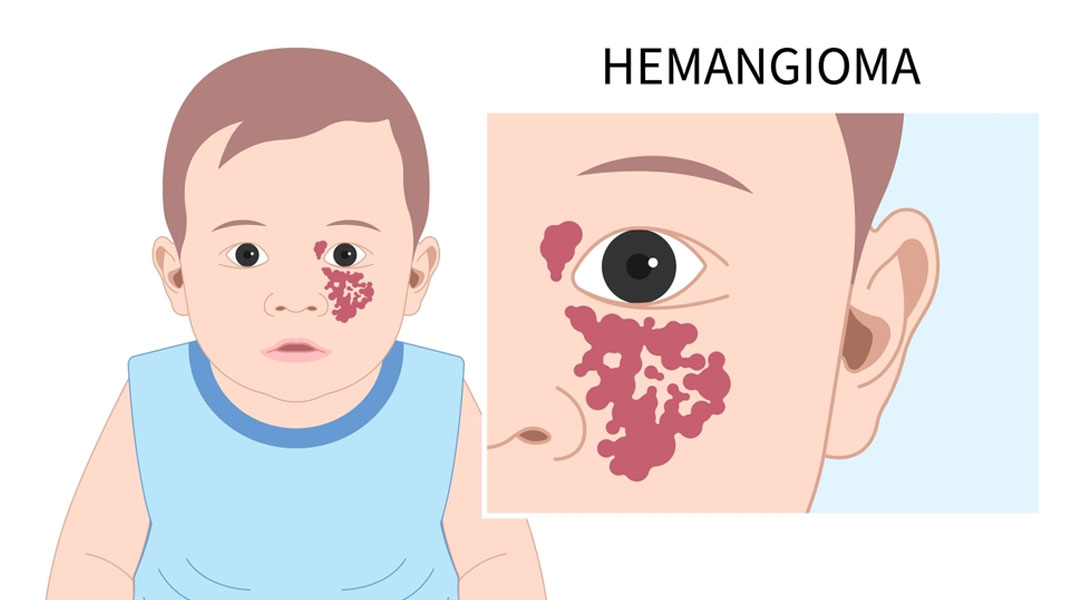
What is Hemangioma?
A hemangioma is a benign (non-cancerous) growth of blood vessels. It often appears as a red or purple mark on the skin and is sometimes called a "strawberry mark" due to its appearance. Hemangiomas are most common in infants and usually appear shortly after birth.
Causes of Hemangioma
Hemangiomas occur due to an abnormal buildup of blood vessels in one area of the body. The exact cause is unknown, but they are not inherited or caused by anything the parents did during pregnancy.
Types of Hemangiomas
- Superficial (Capillary) Hemangioma – Appears on the skin surface.
- Deep (Cavernous) Hemangioma – Located deeper under the skin.
- Mixed – A combination of both superficial and deep.
Common Locations
- Face and neck
- Scalp
- Chest and back
- Liver or internal organs (in rare cases)
Symptoms
- A red or bluish lump or birthmark
- Rapid growth in the first few months
- May ulcerate or bleed in some cases
- Usually painless unless infected
Diagnosis
Most hemangiomas are diagnosed through a physical exam. In some cases, imaging tests like ultrasound or MRI may be recommended to determine the size and depth.
Treatment Options
Most hemangiomas do not require treatment and fade on their own by the age of 5 to 10 years. However, treatment may be necessary if the hemangioma:
- Affects vision, breathing, or other functions
- Becomes painful, ulcerated, or infected
- Grows rapidly or is cosmetically concerning
Treatment options include:
- Beta-blocker medications (e.g., oral propranolol or topical timolol)
- Laser therapy
- Surgery (in rare cases)
